
“Fall Back” with Grace: Approaching the Imminent Clock Change
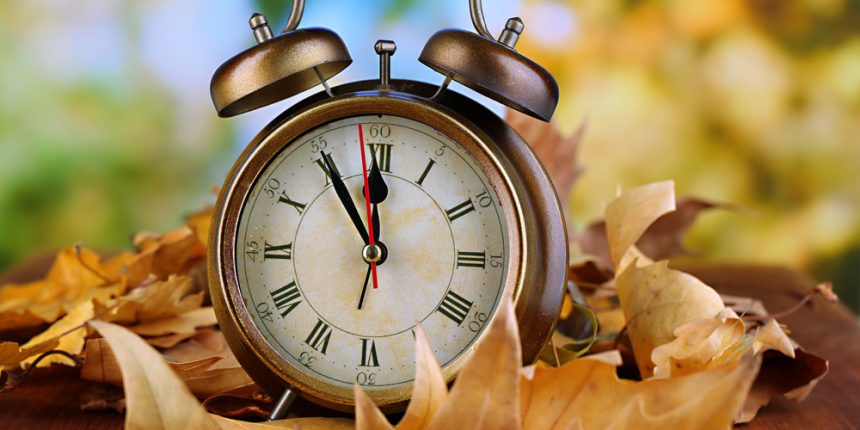
With the “fall back” clock change approaching this weekend and the welcome gift of an extra hour, we consulted with sleep expert and Silver Hill friend, Fiona Barwick, PhD, DBSM, of Stanford University, on how to best approach the occurrence without undue interruption to sleep and energy.
 Insights from Fiona Barwick, PhD, DBSM
Stanford University School of Medicine
The change in the amount of light we get as summer moves into fall/winter likely plays a role in the ease or difficulty of the Daylight Saving Time (DST) to Standard Time (ST) transition but will vary between individuals depending on their sensitivity to seasonal changes in light-dark exposure.
Age can also decrease resilience to “jet lag” type symptoms, and the shift from DST to ST (or the reverse) reflects a type of jet lag. Again, however, there is a lot of individual variability at any age in response to this change.
If you are among those who feel the impact of the clock change, here are “Fall Back” strategies to counter the effects:
1. Do nothing before “Fall Back”
This strategy works best for those who experience minimal sleep disruption when transitioning from DST to ST.
2. Shift ahead of “Fall Back”
Start shifting your sleep schedule 30 minutes earlier on October 30th, two days before November 1st. This approach eases the transition by making the shift in stages.
For example, a 10:00 PM – 6:00 AM schedule would become 9:30 PM – 5:30 AM two days before the time change and 9:00 PM – 5:00 AM one day before. This latter schedule would naturally become 10:00 PM – 6:00 AM once the transition from DST to ST occurs.
3. Stay on DST time
Keep your usual clock-time schedule per DST while recognizing that it will now be one hour earlier per ST. For example, a 10:00 PM – 6:00 AM schedule before the transition from ST would be 11:00 PM – 7:00 AM after the transition to DST. This slightly later schedule may still accommodate school, work or family obligations and will likely shift earlier naturally as your body clock adjusts to the new time.
Learn More
To learn more about Sleep Health, and the six dimensions thereof—Sleep Duration, Sleep Timing, Sleep Regularity, Sleep Efficiency, Sleep Satisfaction, and Daytime Alertness—check out Dr. Barwick’s March 2026 Grand Rounds presentation on Sleep Medicine. View the Grand Rounds presentation on Sleep Medicine ››
It’s full of valuable information and suitable for both clinicians seeking information relevant to the sleep needs of their psychiatric patients; and for the general public, seeking information on sleep health and sleep quality.