

From Stuck to Self-Aware: How Silver Hill’s Young Minds Group Supports Young Adults on Their Journey
What does a Silver Hill outpatient program look like that helps emerging adults (ages 18 to 30) discover a deeper sense of self, create their own path toward success, and reach their potential?
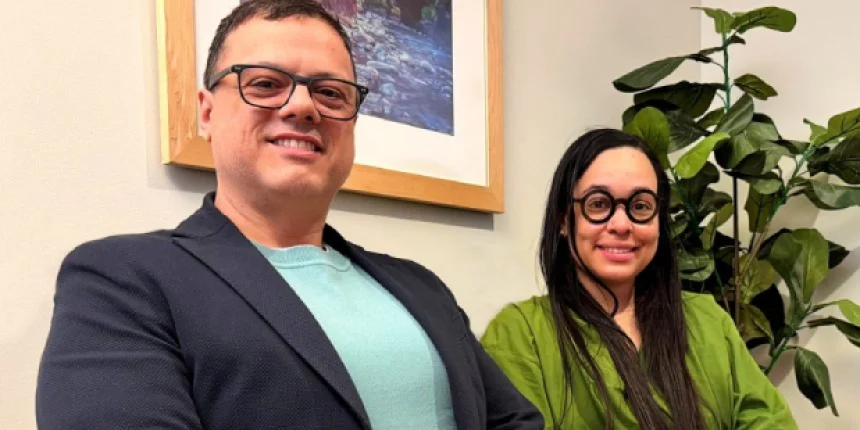
This question was top of mind for Amanda Calhoun, MD, director of outpatient services, and Jonathan Coico, LCSW, and outpatient services clinical lead, as they designed the Young Minds Group.
The Silver Hill Young Minds Group recently launched as a self-pay ($250 per session) outpatient group program that meets twice weekly for six weeks. Sessions are held at Silver Hill’s New Canaan campus, with virtual attendance considered on a case-by-case basis.
Dr. Calhoun and Coico recently shared why they created Young Minds Group, what participants can expect, and how the program supports young adults at a critical stage of development.
Q: Why is Young Minds Group needed?
Dr. Calhoun:
I was encountering a lot of patients who felt out of place. Our existing outpatient programs are great, but they weren’t hitting the topics they wanted to talk about. They said they felt stuck and weren’t reaching their potential. I started thinking about taking a different approach for these patients, one that takes them a little deeper and is more mindful and perhaps more profound.
Q: What can participants expect from their Young Minds Group sessions?
Dr. Calhoun:
You’re not going to come to Young Minds and just get a workbook and practice skills. We are pushing these young people to think deeply and critically about themselves and their relationships and to think about why they are stuck. We give them things to think through, but it’s much more creative than that.
We encourage them to think deeply and come to an understanding of self-awareness and their relationships with others. It’s about getting to: “What is going on with me, and why am I not reaching my potential?”
Coico:
It’s a psychodynamic approach in many ways, while incorporating mentalization-based treatment. Dr. Calhoun, as a child psychiatrist, has a developmental lens. I am quite involved in the clinical communities studying mentalization as well as transference focused psychotherapy. They are different schools of thought that are very complementary and quite unique.
We help people better understand who they are and develop a firmer sense of self. It is evidence-based, not a skills-based treatment, so it does not have a DBT (dialectical behavioral therapy) feel to it, in terms of structure. It’s more fluid. The group dynamic dictates where the sessions go.
Q: Each participant chooses a core conflict to focus on during the six-week program. Why is that important?
Coico:
That core conflict that patients present is often something along the lines of “I want to know who I am” or “I want to figure out where I am going because I’m lost.” It’s often part of a larger constellation of structural components of their sense of self and others.
Dr. Calhoun:
But we aren’t going to tell them that their conflict may not be singular; we want them to come to that conclusion on their own.
Jonathan and I are guides. A lot of these young people have had adults talking at them their whole lives: “This is what I was doing at your age. Here’s what your problem is. Here’s what you should do.” We’re not here to do that. We’re here to help them figure it out themselves.
They are trying to become independent, but they don’t know how because people have always told them what to do. We help them process their behaviors and experiences, learn how to solve problems, and be comfortable with their own identity.
Q: Why is meeting as a group the best approach for these young adults?
Dr. Calhoun:
Young adults who are not living up to external pressure and expectations can feel like something is wrong with them, like they are abnormal. It’s sad and potentially dangerous when young people start feeling isolated and alone. It’s hard for them to imagine that others are going through the same thing. Getting them into a group with people who are feeling the same way is validating.
Each time someone shares something, we encourage the other group members to be curious and ask questions. They end up providing insight and wisdom to each other and becoming part of something bigger than themselves. The participants are creative, insightful, and motivated people with so many gifts, and we want them to share those gifts with each other. As humans, doing something for someone else makes you feel good. The end result is a positive sense of self.
Q: What does success look like at the end of the program?
Coico:
Success is gaining a better understanding of who they are, their relationships, and how those dynamics have impacted and shaped them. It’s getting a renewed sense of where they want their life to go.
Dr. Calhoun:
It’s a launching pad. Success can be getting a job or going back to school, but it’s deeper than that. The hope is that they leave with a positive sense of self. We want them to like themselves and the person they are becoming—and if they don’t like it, to feel empowered to change it.
Q: What role does family play in Young Minds Group?
Dr. Calhoun:
Parents often say, “We’ve given them all the tools to be successful—tutors, college, support—why aren’t they able to get a job?” Or: “They were high performing in high school, and now they’re struggling in college.” You can’t work with this population without incorporating the family structure, whether that means helping participants think differently about their family or actually having a session with them.
Relationships almost always contribute to their conflicts, for better or worse. We’re helping both the family and the participant understand that something deeper is going on, so everyone can come together to help move this person forward.
Q: What challenges are participants experiencing before starting Young Minds?
Coico:
They’re having trouble finding their path. Their motivation isn’t what it used to be, and they’re not enjoying things that once brought them joy. Part of that is the difficulty of letting go of being a kid, a teenager, or a college student. They feel like they should be doing something else, but they don’t know what that is. This program helps them unravel that and make sense of it.
Dr. Calhoun:
They were very recently kids. It feels like a long time ago to them, but it really wasn’t. Young Minds is an important opportunity to open the box and see the options ahead. We want them to blossom into who they really are and gain a richer picture of themselves.
Q: Why should an emerging adult join Young Minds Group?
Dr. Calhoun:
To realize how much potential they have. They shouldn’t feel overwhelmed by it. They should be energized and motivated by it. It’s okay to not have it all figured out right now. This is an opportunity that can be life-altering. Opportunities like this can change your life. We guide them so they can arrive at those life-altering realizations themselves.